Benefits of Charter Schools in Public Education: What Families Should Know
Choosing the right school for your child is one of the most consequential decisions a family makes. Charter schools have grown into a significant part of the American public education landscape, yet many parents still aren't sure what they actually are, how they work, or whether they're a good fit. This guide walks through the real advantages charter schools offer — grounded in how they actually operate, not in policy talking points.
What Makes a Charter School Part of Public Education
Charter schools are tuition-free, publicly funded schools that are open to all students — they are not private schools. That's the single most important thing to understand before evaluating one.
The confusion is understandable. Charter schools often have distinct names, unique educational models, and smaller enrollment numbers, which can make them feel like something separate from the public school system. But they operate under public funding and are required to admit students through an open enrollment process, typically using a lottery when demand exceeds capacity.
What sets them apart is the charter agreement — a formal contract between the school and a government authorizing body (often a state education agency or local school board). That agreement grants the school certain freedoms to operate differently from a traditional district school, in exchange for meeting defined accountability standards. Think of it as a license to innovate, with accountability built in from the start.
According to the National Center for Education Statistics, charter schools serve millions of students across the United States, operating within the public education system at no cost to families.
Flexibility to Design a Learning Model That Works
Charter schools can build their curriculum, schedule, and instructional approach around a specific educational philosophy — and that flexibility is one of their most practical advantages. Traditional district schools generally follow a standardized structure set at the district level, which limits how much any individual school can diverge.
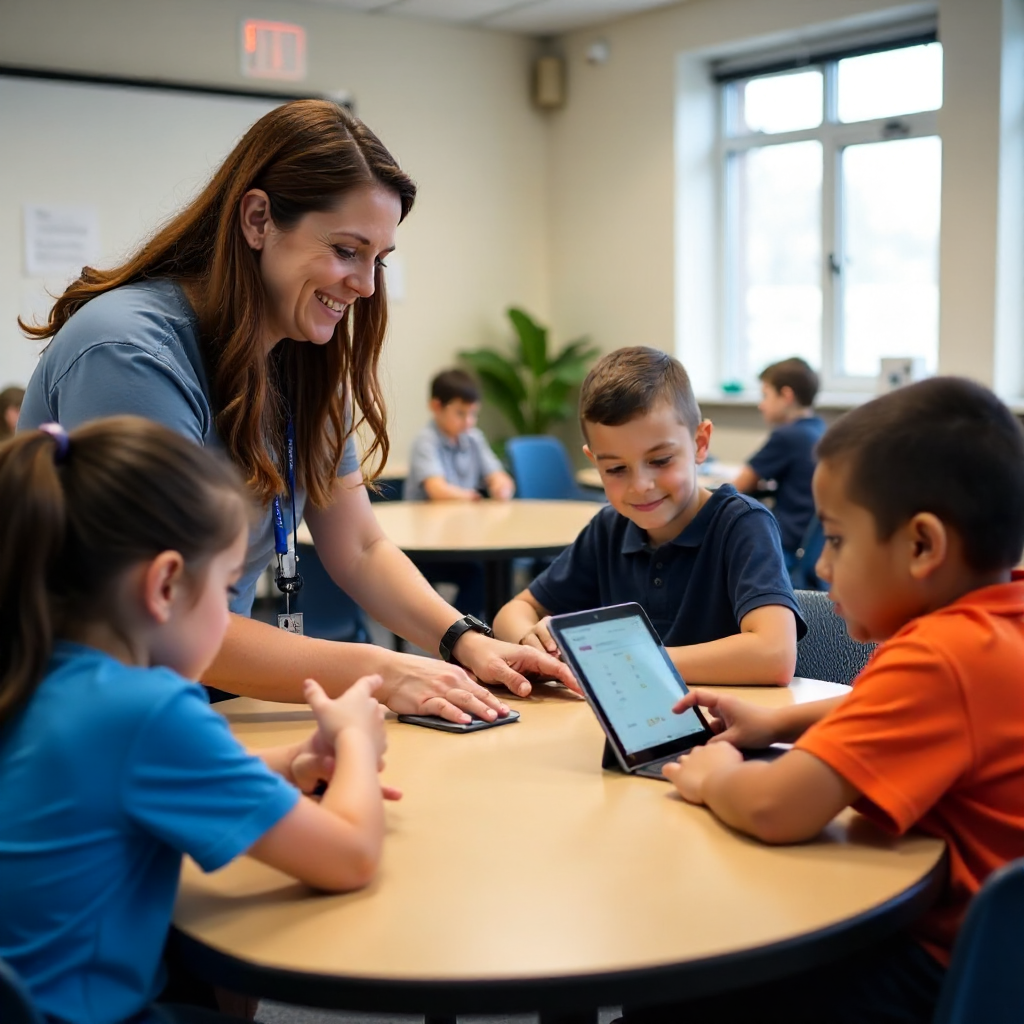
A charter school, by contrast, might organize its entire program around blended learning — a model that combines direct teacher instruction with self-paced digital learning tools. This isn't a minor scheduling tweak. It changes how teachers and students interact, how progress is measured, and how time in the classroom is used.
Blended learning works particularly well when a school serves a range of learners across grades 3 through 7. Students at that age span several developmental stages simultaneously. Some third graders are ready for material typically introduced in fifth grade; some sixth graders still need reinforcement of foundational skills. A blended model lets teachers rotate groups through different activities — small-group instruction, independent digital practice, collaborative projects — without forcing every student through the same content at the same pace.
Other charter schools organize around project-based learning, language immersion, or arts integration. The specific model matters less than whether the school has actually built its systems — staffing, scheduling, assessment — to support that model consistently.
Personalized Instruction Across Grade Levels
Smaller enrollment and flexible structures allow charter school teachers to know their students well and adjust instruction accordingly — something that becomes harder as class sizes and school populations grow.
In a large district school, a teacher with 30 students and a fixed curriculum pacing guide has limited room to slow down for students who need more time or accelerate those who are ready to move ahead. A charter school with a smaller student body and a model built around personalized instruction can do both, often within the same classroom period.
For students in grades 3–7, this matters in concrete ways. A fourth grader who reads below grade level doesn't have to wait for the whole class to catch up — targeted small-group instruction can address the gap directly. A seventh grader who has already mastered the math concepts in the standard curriculum can move into pre-algebra without waiting for an administrative grade-skip process.
Teachers in this environment tend to function more like coaches than lecturers. They spend less time delivering the same content to everyone at once and more time working with students individually or in small clusters based on where each student actually is.
Accountability Through the Charter Agreement
Charter schools are held to performance standards by their authorizing body, and failing to meet those standards can result in the school losing its charter — that is, being closed. This creates a direct, structural link between school operations and student outcomes.
Traditional public schools face accountability mechanisms too, but the consequences are rarely as immediate or as tied to a school's continued existence. A charter that consistently underperforms academically, mismanages finances, or fails to meet the terms of its agreement can be shut down, which is a meaningful incentive.
This accountability runs both ways. Families choosing a charter school can request to see the school's charter agreement and any performance reports submitted to its authorizer. That documentation tells you what the school committed to deliver and how it has performed against those commitments. It's a level of transparency that isn't always easy to find for traditional district schools.
The U.S. Department of Education's Charter Schools Program provides additional context on how federal oversight and state authorization interact in charter accountability systems.
A Stronger Role for Families and Community
Charter schools tend to involve parents more directly in school culture, governance, and day-to-day learning than larger district schools typically do. This isn't universal, but it's a structural tendency worth understanding.
Part of this comes from scale. A school serving 150 students operates very differently from one serving 1,500. Leadership is more accessible, communication is more direct, and parents are more likely to know their child's teachers personally. Decisions that might take months to filter through a large district bureaucracy can be made quickly at a small charter school.
Some charter schools formalize family engagement as part of their model — requiring a certain number of volunteer hours, involving parents in governance committees, or holding regular community forums where school direction is discussed. Others build it more informally through school culture.
For families who want to be active participants in their child's education rather than passive recipients of it, this closer relationship with the school community is a real advantage. It also means that if something isn't working for your child, you're more likely to be heard.
Who Thrives in a Charter School Environment
Charter schools are a strong fit for students whose learning needs or styles aren't well served by a traditional, standardized classroom structure. But they're not the right choice for every child — and knowing the difference helps families make a decision they won't regret.
Students who tend to do well in charter school environments often share a few characteristics:
- They benefit from more individualized pacing — either because they're ahead in some areas, behind in others, or both
- They do better in smaller settings where adults know them well
- They're capable of some self-direction in their learning, especially in blended or project-based models
- Their families are engaged and willing to stay involved in school life
Students who may find the transition harder include those who need very intensive special education services that a small school lacks the staff to provide, or those who thrive in the social breadth of a large school with many extracurricular options.
The honest answer is that school fit matters more than school type. A well-run traditional public school will serve most children better than a poorly run charter, and vice versa. The question to ask isn't "which type of school is better" — it's "does this specific school's model match what my child needs right now."
Questions to Ask Before Choosing a Charter School
Before enrolling, families should ask concrete questions that reveal how the school actually operates, not just how it describes itself in marketing materials.
Start with the school's educational model:
- What does a typical school day look like for a student in grades 4 or 5?
- How is instruction differentiated for students who are ahead or behind grade level?
- If the school uses blended learning, what platforms or tools does it rely on, and how much screen time does that involve?
Then look at accountability and outcomes:
- What does the school's charter agreement require it to achieve, and has it met those targets?
- What do state assessment results look like compared to district averages?
- What is the school's enrollment and attrition rate — are families staying or leaving?
Finally, assess community and culture:
- How does the school communicate with families, and how quickly does leadership respond to concerns?
- What role can parents play in school governance or decision-making?
- Can you visit a classroom during a normal school day before committing?
A school that answers these questions openly, with specific examples and accessible data, is giving you a meaningful signal about how it operates. Hesitation or vague answers are worth paying attention to.
Frequently Asked Questions
Are charter schools free to attend?
Yes. Charter schools are publicly funded and tuition-free for all students. They cannot charge enrollment fees, and they must accept applications from any student within their eligible geographic area.
How are charter school teachers different from district school teachers?
Charter school teachers must meet state certification requirements, just like district teachers. Where charter schools sometimes differ is in how they structure roles — teachers may take on more coaching functions, work across grade levels, or participate in school governance in ways that aren't typical in district schools.
What is blended learning and how does it work in a charter school?
Blended learning combines face-to-face teacher instruction with technology-enabled self-paced learning. In practice, a student might spend part of their math block working with a teacher in a small group, then rotate to an adaptive digital program that adjusts to their skill level, then join a collaborative activity with peers. Charter schools with flexibility over their schedule and curriculum can implement this model more completely than schools locked into fixed district-wide structures.
Can students with special needs attend charter schools?
Yes. Charter schools are public schools and are required to serve students with disabilities under federal law, including IDEA and Section 504. That said, the range and intensity of special education services varies by school. Families of students with significant needs should ask specifically about the school's special education staffing and service delivery model before enrolling.
How do I know if a charter school is accredited or accountable?
Every charter school operates under a charter agreement with an authorizing body — typically a state education agency, university, or local school board. You can request a copy of that agreement and ask for the school's most recent performance report. Many states also publish charter school report cards online. Accreditation through an independent body is a separate credential that some charter schools pursue voluntarily; it's worth asking whether the school has sought it.