Differentiated Instruction Techniques for Mixed-Ability Classrooms
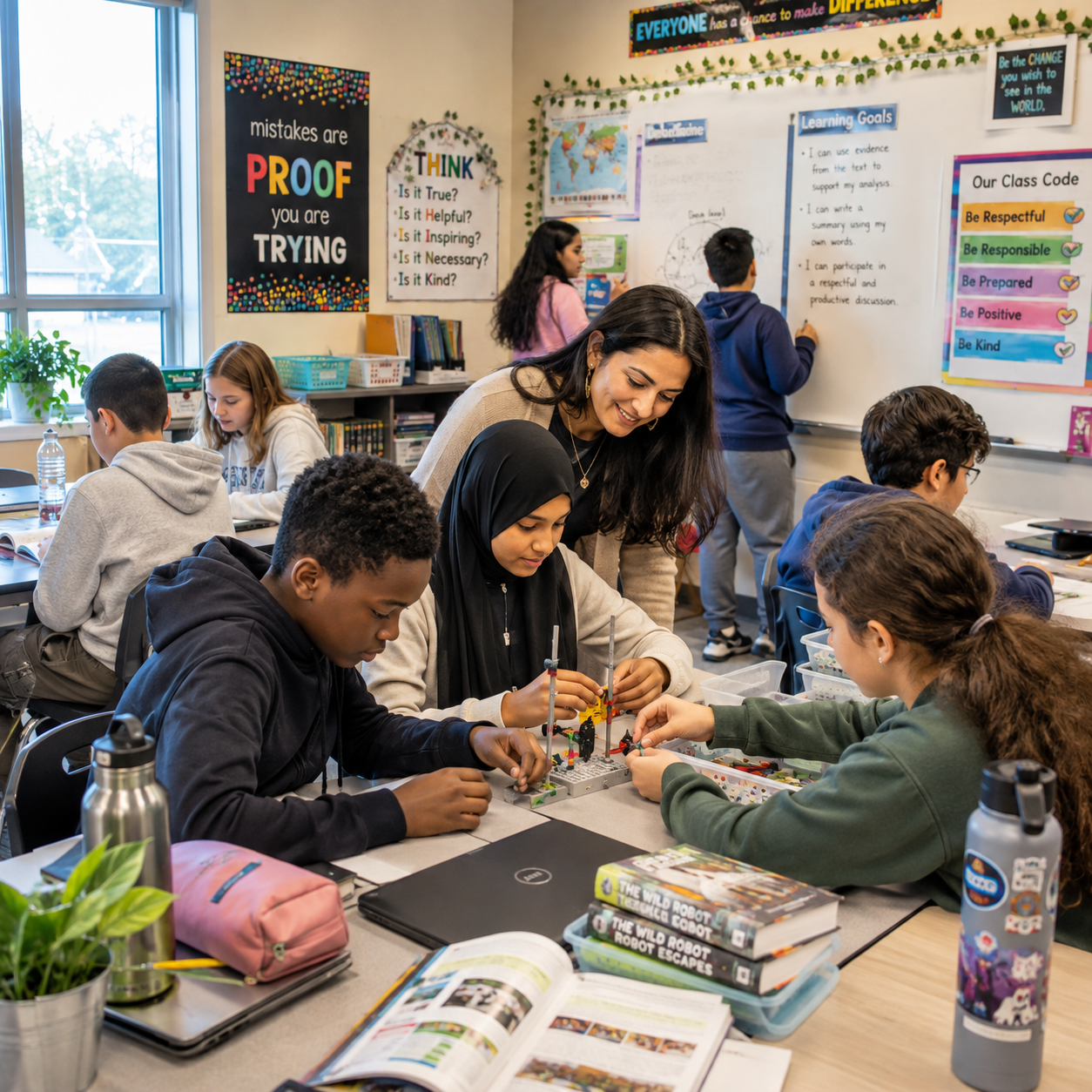
Mixed-ability classrooms bring together students with different levels of prior knowledge, learning needs, interests, language backgrounds, and strengths. Differentiated instruction helps teachers respond to that variation while keeping the class focused on shared curriculum goals and high expectations.
What Is Differentiated Instruction?
Differentiated instruction is an approach that adapts content, learning processes, student products, and the classroom environment to meet differences in readiness, interests, and learning needs. Students work toward meaningful common objectives, but they may use different supports, pathways, pacing, or formats to reach them.
For example, during a science unit on ecosystems, every student might explain how energy moves through a food web. One learner could use a labeled diagram, another could analyze a short data set, and a third could extend the task by evaluating how a local environmental change affects the ecosystem. The learning goal remains connected, while the route becomes more accessible or challenging.
The four elements teachers can adjust
- Content: the information, texts, examples, vocabulary, or resources students use.
- Process: how students explore and practice a concept, such as through discussion, modeling, investigation, or guided practice.
- Product: how students demonstrate understanding through writing, speaking, creating, solving, or performing.
- Learning environment: the routines, seating, noise level, tools, and collaboration structures that support concentration and participation.
Differentiation does not mean lowering standards or preparing a completely separate lesson for every student. It means planning several viable ways to access the same important learning. Universal Design for Learning, or UDL, supports this principle by encouraging multiple means of engagement, representation, and action or expression. Teachers can review the UDL guidance from CAST when designing accessible lessons.
Assess Student Readiness, Interests, and Learning Needs
Formative assessment reveals what students are ready to learn, what support they need, and which interests might increase engagement. Teachers can use that evidence before and during a lesson to adjust grouping, materials, questioning, pacing, and extension work.
Start with a brief readiness check rather than assuming that grade level or previous performance tells the whole story. A five-minute writing prompt, entrance question, vocabulary sort, drawing, oral explanation, or low-stakes problem can show whether students are missing background knowledge, ready for the target concept, or prepared to go further.
Use more than test scores
- Observation: note who begins independently, who needs directions repeated, and who uses effective strategies.
- Student conferences: ask learners what helps them understand, what they find difficult, and which topics interest them.
- Work samples: examine errors and partial understanding, not only final grades.
- Self-assessment: invite students to rate their confidence and identify a next step.
- Learning profiles: record relevant preferences and needs without treating them as fixed labels.
Use this information as a planning snapshot, not a permanent classification. A student who needs vocabulary support in history may show advanced reasoning in mathematics. Readiness also changes by topic, task, and day, so assessment should lead to flexible decisions.
A useful planning question is: What is the essential understanding, and what barrier is preventing this student from showing it? The answer may point to a glossary, worked example, audio text, additional processing time, or a more complex application task.
Use Flexible Grouping and Targeted Support
Flexible grouping places students in changing pairs or small groups according to the purpose of the lesson, current readiness, interests, or learning needs. Groups should be temporary and reviewed often, rather than becoming permanent ability tracks.
Use whole-class instruction when introducing a shared concept, then move students into purposeful groups. A teacher-led group might revisit prerequisite vocabulary while another group applies the concept independently. Later, students can regroup by interest to compare examples or by mixed readiness to complete a collaborative product.
Make group work purposeful
- Give each group a clear question, product, and time limit.
- Assign roles such as facilitator, evidence finder, recorder, and checker, then rotate them.
- Teach students how to ask for clarification, explain reasoning, and disagree respectfully.
- Provide an individual accountability step, such as an exit response or personal reflection.
Targeted small-group instruction works best when it is brief and specific. A teacher may spend eight minutes modeling how to identify evidence, then release students to practice while checking another group. Peer collaboration can extend practice, but it should not turn advanced students into unpaid permanent tutors. Every learner needs access to challenging thinking and direct teacher feedback.

Adapt Content and Learning Activities
To adapt content and learning activities, keep the essential objective constant while varying entry points, scaffolds, complexity, pacing, and opportunities for extension. Tiered assignments and choice-based tasks make this possible within one classroom lesson.
Tiered assignments
A tiered assignment offers versions of a task that address the same important concept at different levels of support or complexity. In a mathematics lesson on proportional relationships, one group might use a table and guided prompts, another might solve unfamiliar examples, and a third might critique a misleading graph and justify its conclusion.
Each tier should require genuine reasoning. Avoid creating a low tier that consists only of repetitive work or a high tier that simply contains more questions. Choosing additional complexity means accepting that students may need more time and clearer success criteria.
Scaffolding and choice
Scaffolding temporarily supports students as they develop independence. Useful scaffolds include:
- worked examples followed by partially completed examples;
- sentence frames, word banks, graphic organizers, and checklists;
- chunked directions with a visible sequence;
- teacher think-alouds and annotated models;
- access to manipulatives, diagrams, captions, text-to-speech, or reference materials.
Remove scaffolds gradually when students demonstrate control. A support that remains forever can limit independence, while removing it too early can hide the intended learning behind avoidable frustration.
Choice boards allow students to select from several activities, such as writing an explanation, creating a labeled model, recording a short presentation, or solving an applied problem. The choices should differ in format or context while sharing a rubric tied to the curriculum objective. Extension activities can ask ready students to transfer, evaluate, design, or connect ideas rather than simply complete extra work.
Differentiate Student Products and Assessment
Differentiated assessment allows students to demonstrate the same essential understanding through suitable formats, provided the success criteria remain clear and aligned with the curriculum objective. The format can vary, but the evidence required should still be rigorous.
Suppose the objective is to explain causes of a historical event. Students might write an evidence-based paragraph, deliver a structured oral explanation, create an annotated timeline, or record a presentation with cited sources. A common rubric can assess accuracy, use of evidence, reasoning, and clarity across all formats.
Build assessment into the lesson
- Use questioning to uncover reasoning, not just recall.
- Ask students to submit a one-sentence claim and one piece of evidence.
- Use quick polls, mini-whiteboards, or traffic-light self-assessments to identify confusion.
- Offer feedback that names the current strength and the next actionable improvement.
- Allow revision when the goal is learning rather than one-time performance.
Technology can provide audio responses, speech-to-text, captions, and digital creation tools, but technology is not automatically differentiation. A new format helps only when it removes an irrelevant barrier or enables stronger evidence of understanding. Teachers should also check access, privacy, device availability, and the extra time required to learn a tool.
Manage Differentiation Within a School Program
To manage differentiated instruction within a school program, begin with the shared curriculum objective, plan a small number of instructional pathways, and coordinate routines and resources across the grade level or department. Differentiation becomes sustainable when it is part of normal program planning rather than an extra project added after lessons are written.
Use a planning grid with four columns: essential objective, likely barriers, planned supports, and evidence of learning. This keeps differentiation tied to curriculum expectations. For a reading objective, barriers might include decoding, vocabulary, attention, or difficulty organizing evidence. Planned responses could include an audio version, pre-teaching key terms, chunked text, or a model paragraph.
Design routines that protect teacher time
- Post a visual agenda and success criteria.
- Teach students how to collect materials and move between stations.
- Use a help protocol, such as reread, check an example, ask a partner, then ask the teacher.
- Prepare reusable scaffold cards, vocabulary banks, and extension menus.
- Schedule short teacher conferences instead of trying to provide constant individual attention.
Coordinate with special education teachers, English-language support staff, counselors, librarians, and families where appropriate. Shared language about objectives, accommodations, assessment evidence, and student independence prevents mixed messages. The classroom teacher remains responsible for the common learning program, while support staff can help identify access tools and useful interventions.
Resource limits matter. If a strategy requires six versions of every text, daily technology, or extensive marking, it may not survive a full term. Select approaches that fit available staffing, planning time, and school policies.
Practical Tips for Implementing Differentiated Instruction
To implement differentiated instruction, start with one lesson objective, one readiness check, one flexible grouping decision, and one adjustment to student choice or scaffolding. A manageable cycle produces better information than an ambitious system that teachers cannot maintain.
A seven-day starting process
- Choose one priority objective. Identify what every student should understand or be able to do.
- Collect quick evidence. Use an entrance task, discussion, or sample of independent work.
- Plan three access points. Include a scaffolded route, an on-level route, and an extension or application route.
- Teach and observe. Record patterns in errors, independence, questions, and engagement.
- Regroup briefly. Give targeted instruction, then return students to independent or collaborative work.
- Offer a product choice. Keep the rubric connected to the shared objective.
- Review the evidence. Decide which support to retain, remove, or redesign.
Common mistakes are easy to spot. Permanently labeling groups can lower expectations and restrict opportunity, so change group membership as evidence changes. Giving advanced students extra worksheets confuses quantity with challenge; use transfer and evaluation tasks instead. Creating too many lesson versions can exhaust planning time; begin with one common task and vary its scaffolds. Finally, treating learning preferences as fixed can narrow instruction. Offer varied experiences to everyone, then use evidence of learning to guide next steps.
Across subjects, the same framework applies. In English, students can analyze a shared text with vocabulary support, guided questions, or an independent comparative challenge. In mathematics, they can use manipulatives, visual models, or symbolic reasoning toward one concept. In science and social studies, students can choose among evidence-based products while meeting common criteria. The goal is a responsive classroom in which every learner has a credible route into worthwhile work.
Frequently Asked Questions
How does differentiated instruction work in a mixed-ability classroom?
It works by keeping important learning goals shared while varying support, complexity, grouping, pacing, materials, and ways students demonstrate understanding. Formative assessment helps the teacher decide which variation each learner needs.
What is the difference between differentiated instruction and individualized instruction?
Differentiated instruction usually serves groups of students within the regular classroom through planned options and flexible responses. Individualized instruction creates a more personalized program for one student, often based on specific goals, services, or documented needs.
How can teachers differentiate without creating separate lessons for every student?
Use one core task with optional scaffolds, tiered questions, flexible groups, choice boards, and extension prompts. Reusable resources and common rubrics reduce preparation while preserving meaningful variation.
What are examples of differentiated activities?
Examples include tiered mathematics problems, reading groups with different levels of text support, science investigation choices, vocabulary stations, scaffolded writing frames, peer discussion roles, and multiple product formats such as essays, diagrams, models, or presentations.
How can differentiated instruction be assessed?
Assess it through student work, formative checks, observations, conferences, common rubrics, and progress toward curriculum objectives. Review whether supports improved access and independence, rather than measuring success only by task completion.