How Personalized Learning Paths Support Every Diverse Learner in Grades 3–7
Every classroom holds a room full of different stories. The third-grader who reads two grade levels ahead sits next to a classmate still building foundational fluency. A seventh-grader who thrives in hands-on projects struggles to stay focused during lecture-style lessons. And somewhere in between, a student new to English is doing math that would challenge most adults her age. A single lesson plan cannot serve all of them well — and that tension is exactly why personalized learning paths matter.
What Does "Personalized Learning Path" Actually Mean?
A personalized learning path is a structured, individualized sequence of learning experiences designed around a specific student's current skills, goals, and pace — not around a fixed calendar or a class average. Unlike traditional instruction, where every student receives the same lesson on the same day and moves on together regardless of mastery, a personalized path adjusts content, pacing, and support based on what each learner actually needs right now.
This does not mean students are left to figure things out alone. Teachers remain central. The difference is that the teacher's role shifts from delivering one lesson to thirty students toward guiding thirty students through learning experiences calibrated to where each one is. Think of it less like a lecture hall and more like a skilled coach working with athletes at different stages of development — same goals, different routes to get there.
Why Diverse Learners Need More Than a Standard Curriculum
The range of diversity in a typical grades 3–7 classroom goes well beyond what standardized curriculum frameworks account for. Academic readiness alone can span three to four grade levels within a single class. Add in differences in learning styles, cultural backgrounds, home language, and prior educational experience, and a one-size-fits-all approach starts to look less like a solution and more like a compromise.
At Kaʻu Learning Academy, situated in rural Hawaiʻi, this diversity is especially vivid. Students come from Native Hawaiian families, immigrant communities, and multigenerational local households. Some have strong oral storytelling traditions but limited exposure to academic writing conventions. Others have moved between school systems and carry gaps that standard placement tests miss entirely.
When instruction ignores these differences, some students coast through unchallenged while others fall further behind — not because they lack ability, but because the material never met them where they were. Differentiated instruction addresses this directly by acknowledging that equity does not mean identical treatment. It means giving each student what they actually need to grow.
How Blended Learning Makes Personalization Possible
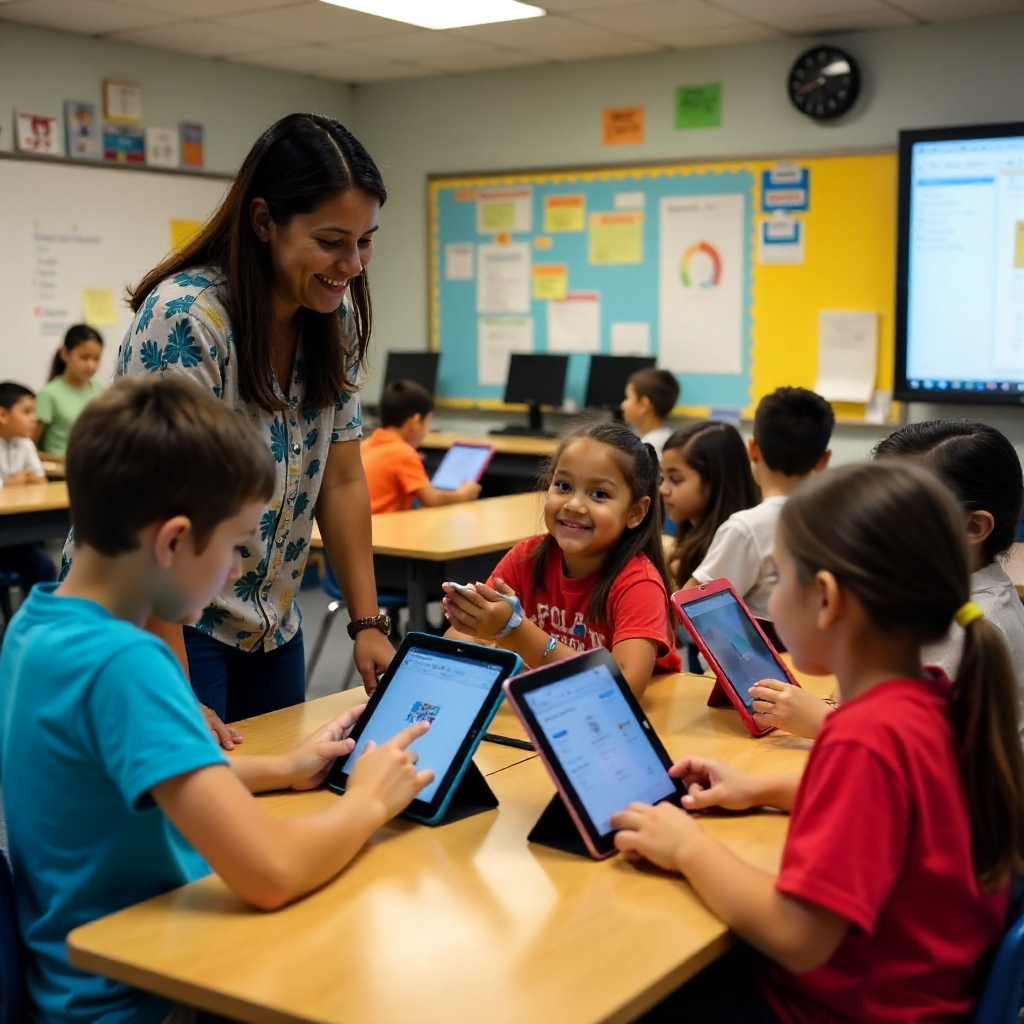
Blended learning — the combination of in-person teacher instruction with purposeful digital tools — is what makes personalization practical at scale. Without it, asking one teacher to simultaneously deliver five different lessons to thirty students would be unrealistic. With it, technology handles certain adaptive practice tasks while the teacher focuses attention where human judgment is irreplaceable.
In a blended learning classroom, a student might begin the morning with a short digital activity that adjusts its difficulty based on yesterday's performance. That data gives the teacher a real-time snapshot of who needs a small-group reteach, who is ready to move forward, and who might benefit from a different type of practice altogether. The teacher then uses that insight to organize the next block of instruction.
The technology is a tool, not the teacher. Students who struggle with screens or need more tactile, relational learning still get that — blended learning simply expands the range of entry points available. For students in Kaʻu navigating inconsistent home internet access, the school's model prioritizes offline-capable tools and ensures that digital work happens within the school day rather than as homework.
Building a Personalized Path: Key Components at Kaʻu Learning Academy
Personalized learning paths at Kaʻu Learning Academy are built from four practical components that work together across the grades 3–7 curriculum.
- Formative assessment: Short, frequent checks for understanding — exit tickets, observation notes, brief digital quizzes — give teachers ongoing data without relying solely on end-of-unit tests. This means course corrections happen in days, not weeks.
- Flexible grouping: Students are not locked into fixed ability groups. Groups shift based on the current skill being taught, so a student who needs extra support in fractions might work in a small teacher-led group while independently leading a reading discussion elsewhere.
- Student goal-setting: Even third-graders can articulate what they're working on and why. Teachers guide students through setting short-term academic goals, which builds ownership and makes the learning feel purposeful rather than arbitrary.
- Teacher facilitation: The teacher's role is active and relational — circulating, conferring, asking probing questions, and adjusting in real time. Facilitation is not passive supervision; it requires more nuanced judgment than whole-class delivery.
A typical week might look like this: a student spends part of Monday in a small group working on a specific writing skill, Tuesday doing independent practice through an adaptive reading platform, Wednesday in a student-led discussion with peers at a similar reading level, and Thursday in a one-on-one conference with their teacher reviewing progress toward their personal goal. The structure is consistent; the content is individualized.
Supporting the Whole Child: Academics and Social-Emotional Growth
Academic skill-building and social-emotional learning are not separate tracks — they run together, especially for students in the 3rd through 7th grade window. This is a period of significant developmental transition: students are moving from concrete to abstract thinking, navigating peer relationships with increasing complexity, and for many, shifting from learning to read toward reading to learn.
A personalized learning path that only addresses academic content misses half the picture. At Kaʻu Learning Academy, social-emotional learning (SEL) is woven into how students set goals, reflect on their work, and engage with peers. A student who is anxious about being "behind" needs a different kind of support than one who is academically advanced but struggling with frustration tolerance. Personalized paths account for both.
For students navigating the transition from elementary to middle school — a shift that often coincides with fifth or sixth grade — the continuity of a known learning environment and trusted teacher relationships can make a meaningful difference. The student-centered model at Kaʻu keeps that relational thread intact across grade levels.
What Families Can Expect — and How They Can Participate
Families are partners in personalized learning, not just observers. Parents can expect regular, specific communication about their child's current learning goals, recent progress, and next steps — not just a letter grade at the end of a quarter. This might come through brief written updates, parent-teacher conferences where the student participates, or digital dashboards that show progress toward mastery milestones.
Participation looks different for different families. Some parents want to reinforce specific skills at home; teachers can suggest targeted activities that match what the student is working on at school. Others are most helpful simply by asking their child to explain what they're learning — that kind of verbal reflection strengthens retention and gives parents a real window into the classroom.
Cultural relevance matters here too. At Kaʻu, families are a source of community knowledge, not just recipients of school information. When personalized content draws on local history, Native Hawaiian values, or the lived experiences of the ʻohana, students engage more deeply — and families see their identity reflected in what their children are learning.
Measuring Success: How We Know Personalized Learning Is Working
Progress in a personalized learning model is measured through mastery-based milestones rather than a single annual test score. When a student demonstrates consistent understanding of a concept — through multiple types of evidence, not just one assessment — they move forward. When they haven't yet, they get more time and a different approach, not a lower grade and a move-on anyway.
This approach to learning pace and mastery does not mean standardized assessments are ignored. State requirements exist, and students at Kaʻu Learning Academy take them. But those results are one data point among many, not the primary lens through which a child's growth is understood. A student who enters third grade two years below grade level and ends the year one year below has made significant progress — progress that a single benchmark test might obscure.
Teachers, students, and families review learning portfolios, goal-tracking records, and formative data together. That triangulation gives a far more accurate picture of what a student knows and can do than any single snapshot assessment.
Frequently Asked Questions
How is a personalized learning path different from an IEP or special education plan?
An Individualized Education Program (IEP) is a legally mandated document for students who qualify for special education services under federal law. A personalized learning path, by contrast, is available to every student — it is a general education practice, not a special services designation. The two can coexist: a student with an IEP can also have a personalized learning path, with both working in coordination.
Can students fall behind if they move at their own pace?
The short answer is: teachers actively prevent this. Pacing is not entirely self-directed — teachers monitor progress closely and intervene when a student is moving too slowly or avoiding challenge. The goal is productive struggle within a supported structure, not unmonitored self-pacing.
How do teachers manage multiple learning paths in one classroom?
Flexible grouping, digital tools that handle adaptive practice, and careful planning allow teachers to manage this complexity. It requires strong classroom systems and ongoing professional development, but it is not as chaotic as it might sound from the outside. Most teachers who have worked in this model say they find it more professionally satisfying than whole-class delivery.
Is blended learning appropriate for students who struggle with technology?
Yes — with appropriate scaffolding. Students who are less comfortable with technology receive explicit instruction on the tools they'll use, and digital tasks are designed to be straightforward enough that the technology itself is not the barrier. The focus is always on the learning, not the platform.
How does Kaʻu Learning Academy ensure cultural relevance in personalized content?
Teachers at Kaʻu intentionally select texts, examples, and projects that reflect the cultural landscape of the community — including Native Hawaiian history, local ecology, and the diverse backgrounds of students' families. This is not supplemental; it is built into how learning paths are designed from the start. When students see their world in their schoolwork, engagement follows naturally.