Social-Emotional Learning in the Middle Grades: Strategies That Actually Work for Adolescents
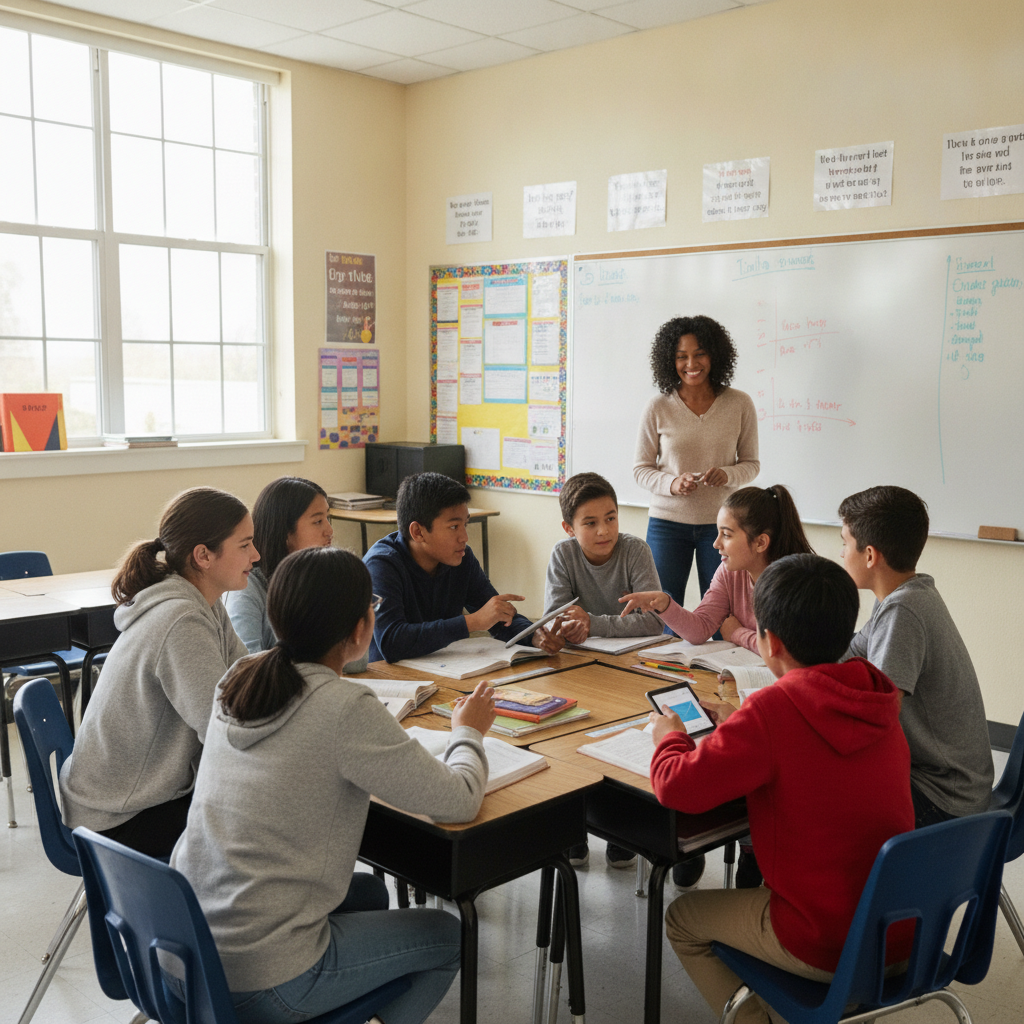
Middle school students are in the middle of everything — caught between childhood and adolescence, between who they were and who they're becoming. That in-between space is exactly why social-emotional learning in the middle grades deserves serious attention from educators and school leaders. The skills students build between ages 11 and 14 shape how they handle conflict, pursue goals, and connect with others for decades to come.
Why Middle School Is a Critical Window for SEL
Early adolescence is one of the most developmentally turbulent periods in a person's life, making grades 6–8 a uniquely high-impact window for SEL. The brain is undergoing rapid reorganization, identity formation is in full swing, and peer relationships suddenly carry enormous weight.
Students at this stage are asking fundamental questions: Who am I? Where do I fit? Do I matter? These aren't distractions from learning — they are the learning. When schools acknowledge and work with these developmental realities rather than around them, students are far more likely to engage academically and behave constructively.
Adolescent development research consistently shows that belonging and emotional safety are prerequisites for cognitive engagement. A student who feels invisible in the hallway or anxious in the cafeteria is not in a position to focus on algebra. Addressing that reality through structured SEL practice isn't a detour from academic goals — it's often the most direct path to them.
The Core SEL Competencies Every Middle School Educator Should Know
The CASEL framework — developed by the Collaborative for Academic, Social, and Emotional Learning — organizes SEL into five core competencies that provide a practical roadmap for middle school educators. Each one looks different at the grades 6–8 level than it does in elementary school.
- Self-awareness: Recognizing one's emotions, strengths, and limitations. In middle school, this might look like a student journaling about what triggers their frustration before a difficult class.
- Self-management: Regulating emotions and behavior to reach goals. For a seventh grader, this is the difference between shutting down after a bad grade and asking for help instead.
- Social awareness: Understanding others' perspectives, including those from different backgrounds. This competency becomes especially relevant as students encounter more diverse peer groups.
- Relationship skills: Communicating clearly, listening actively, and navigating conflict. Middle schoolers are practicing these skills constantly — the question is whether adults are helping them do it well.
- Responsible decision-making: Evaluating consequences and making ethical choices. Peer pressure peaks during these years, making this competency both challenging and critical to develop.
These five areas aren't separate modules to teach in sequence. They overlap and reinforce each other, and the best SEL instruction weaves them together naturally throughout the school day.
How Middle Grade SEL Differs from Elementary Approaches
SEL in grades 6–8 requires a fundamentally different approach than what works in elementary school — not a scaled-up version of the same thing. Applying elementary frameworks to middle schoolers often backfires, leading to eye-rolls, disengagement, or worse, a sense that SEL is childish.
Elementary SEL tends to focus on naming emotions and following rules. Middle school students need something more sophisticated: opportunities to explore identity, exercise autonomy, and make sense of complex social dynamics. They want to be taken seriously as emerging individuals, not managed like younger children.
The role of peer relationships also shifts dramatically. Where a second grader looks primarily to adults for validation, a seventh grader is far more influenced by what their peers think. Effective middle grade SEL harnesses that peer influence rather than competing with it — using structured peer learning, collaborative problem-solving, and student-led discussions as primary vehicles for skill-building.
Another key difference: middle schoolers respond poorly to anything that feels performative or forced. A circle time activity that feels authentic in a third-grade classroom can feel patronizing to a sixth grader. The tone needs to shift toward respect, genuine dialogue, and student agency.
Practical Classroom Strategies for Building SEL Skills
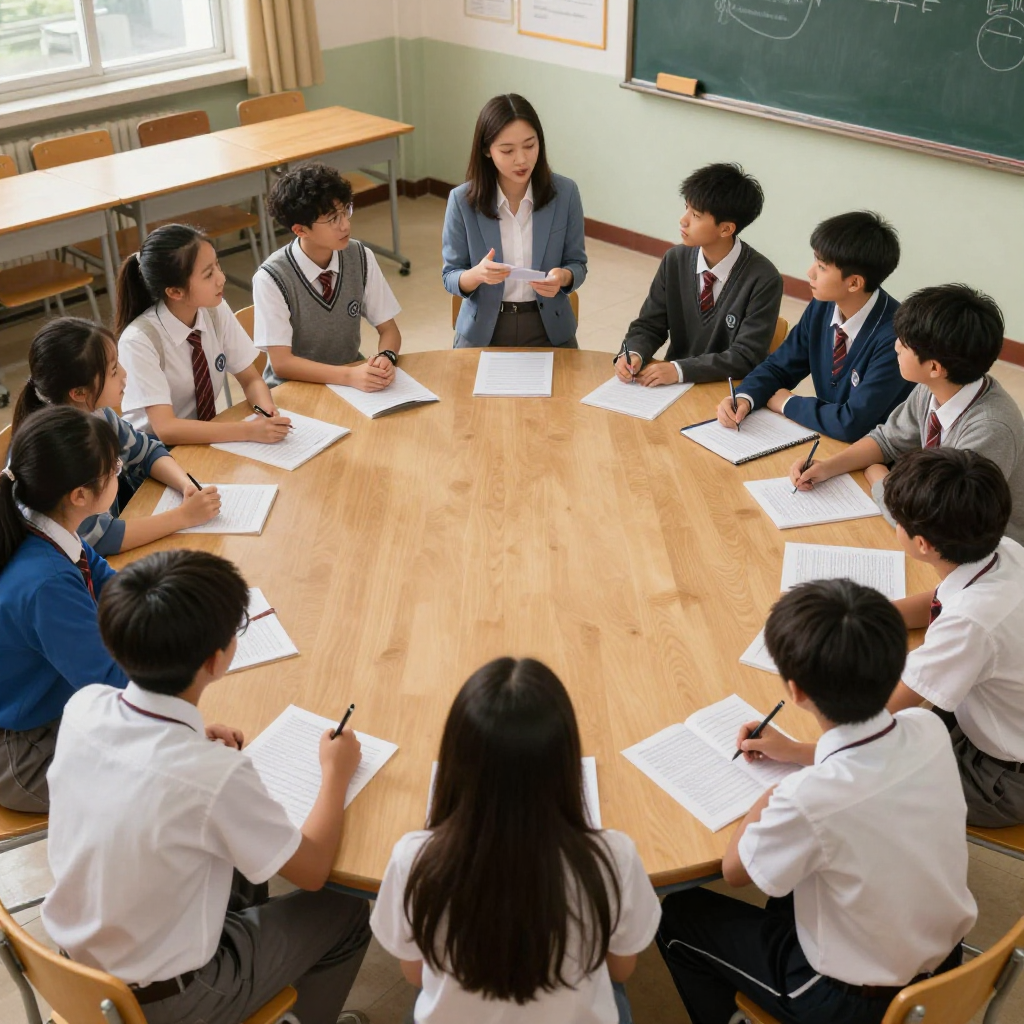
Effective SEL strategies for middle school work best when they're embedded in existing classroom routines rather than bolted on as extras. Here are approaches that consistently translate well to grades 6–8.
Structured Reflection Prompts
Brief, low-stakes writing prompts at the start or end of class build self-awareness without requiring much time. Questions like "What's one thing that made today harder than expected?" or "How did you contribute to your group today?" invite honest reflection. The key is consistency — doing this once a week is far more powerful than a single deep dive.
Cooperative Learning with Explicit Role Structures
Group work only builds relationship skills when students have clear roles and shared accountability. Assigning rotating roles — facilitator, recorder, timekeeper, presenter — gives students practice with different social functions and reduces the social friction that unstructured group work creates. Debrief the process afterward: "What worked? What would you do differently?" That debrief is where much of the SEL learning actually happens.
Growth Mindset Check-Ins
Integrating growth mindset language into academic feedback is one of the simplest SEL moves a teacher can make. Replacing "you're smart" with "you worked through that" shifts students' internal narratives about effort and persistence — both core self-management skills. This doesn't require a separate lesson; it happens in the way teachers respond to student work every day.
Restorative Circles for Conflict
When social conflict arises — and in middle school, it will — restorative conversation structures give students a framework for repairing relationships rather than simply receiving punishment. Even brief, teacher-facilitated check-ins after a conflict can model responsible decision-making in action.
Embedding SEL into Advisory and Homeroom Programs
Advisory or homeroom periods are the most natural vehicle for consistent SEL practice in middle school. These dedicated blocks give students a smaller, stable community within the larger school — often the only place where a student has a consistent adult relationship across multiple years.
When advisory programs are well-designed, they serve as the connective tissue of school culture. Students have a space to discuss what's happening in their lives, practice communication skills, and build the sense of classroom community that makes the rest of the school day feel safer.
Effective advisory SEL doesn't require a formal curriculum, though one can help. Even a simple weekly structure — one day for community-building, one for goal-setting, one for open discussion — creates enough consistency for students to lower their guard and engage honestly. The most important ingredient is a teacher who shows up with genuine curiosity about who their students are.
Schools that invest in advisory programs often report stronger teacher-student relationships across the board, not just within the advisory itself. When students feel known by at least one adult in the building, their willingness to take academic risks increases noticeably.
Connecting SEL to Academic Achievement and School Culture
SEL doesn't compete with academic instruction — it creates the conditions that make academic instruction possible. This is the clearest answer to the common concern that SEL takes time away from content learning.
Students who develop stronger self-management skills miss fewer assignments. Those who build relationship skills collaborate more effectively in group projects. Students with higher social awareness navigate classroom dynamics with less drama, freeing up cognitive bandwidth for actual learning. The CASEL organization has compiled extensive evidence connecting SEL programs to improved attendance, reduced disciplinary incidents, and stronger academic engagement — outcomes that matter to every administrator reviewing school data.
School culture is the longer game. When SEL is embedded consistently across classrooms and grade levels, it shifts the implicit norms of a school. Students begin to expect that emotions are acknowledged, that conflict has a constructive path forward, and that adults are trustworthy. That shift doesn't happen from a single program — it happens when enough teachers are practicing the same language and values daily.
Getting Started: A Simple Framework for Middle School SEL Implementation
Starting SEL implementation doesn't require a complete school overhaul. A focused, three-phase approach gives educators a manageable entry point without overwhelming staff.
Phase 1 — Assess current reality. Before selecting a program or strategy, take stock of what's already happening. Where do students currently practice self-awareness or conflict resolution, even informally? What do teachers already do well? A brief staff survey and a look at discipline data can reveal both strengths and gaps.
Phase 2 — Choose one entry point. Rather than trying to implement all five CASEL competencies at once, identify one area of highest need and start there. A school with chronic conflict issues might begin with relationship skills and restorative practices. A school where students struggle academically despite ability might focus on self-management and growth mindset first.
Phase 3 — Build staff buy-in through experience, not just training. Teachers are far more likely to sustain SEL practices when they've experienced the value personally. Professional development that gives educators a chance to practice SEL skills themselves — not just learn about them theoretically — produces lasting change. When a teacher has sat in a restorative circle or done a structured reflection exercise, they understand why it works.
Sustainability matters more than scale at the start. A few teachers doing SEL well every day will move school culture more than a whole-school rollout that fades by November.
Frequently Asked Questions
What are the five core SEL competencies and how do they apply to middle schoolers?
The five CASEL competencies are self-awareness, self-management, social awareness, relationship skills, and responsible decision-making. In grades 6–8, each competency takes on an adolescent-specific dimension — self-awareness connects to identity development, relationship skills involve navigating peer pressure, and responsible decision-making addresses the real choices students face around belonging and behavior.
How much class time should be dedicated to SEL each week?
There's no single right answer, but many schools find that 20–30 minutes of dedicated SEL time per week — through advisory or homeroom — combined with daily integration into academic classes produces meaningful results. The consistency of practice matters more than the total minutes.
Can SEL be integrated into subject-area classes rather than as a standalone program?
Yes, and in many ways this is more effective for middle schoolers. A science teacher who uses structured collaborative roles is teaching relationship skills. An English teacher who assigns reflective writing is building self-awareness. Subject integration makes SEL feel relevant rather than like a separate "feelings class."
How do teachers measure or assess SEL growth in students?
SEL growth is best captured through a combination of student self-reflection surveys, teacher observation, and behavioral data (like referrals or participation patterns). Standardized SEL assessments exist, but many middle school educators find that qualitative evidence — student writing, advisory discussions, changes in classroom dynamics — tells a richer story.
How can schools support SEL for students who have experienced trauma or chronic stress?
Trauma-informed approaches emphasize predictability, physical and emotional safety, and student agency — all of which align with strong SEL practice. For students carrying significant stress, the most powerful SEL intervention is often a consistent, trustworthy adult relationship. Schools should ensure that no student goes unnoticed by at least one caring adult, and that SEL spaces never feel coercive or exposing.